Everything You Need to Know About Oracle’s Next-Generation Cloud ERP Platform
In today’s business world, companies cannot survive with slow, manual, or disconnected systems. Every department, from finance and procurement to supply chain and operations, needs accurate information at the right time. This is where Oracle Fusion ERP has become one of the leading cloud ERP platforms globally.
This blog gives a simple, human-friendly explanation of Oracle Fusion ERP, why it matters, and how it helps companies run better. Whether you are new to ERP or exploring a career in Oracle, this guide will help you understand everything clearly.
What is Oracle Fusion ERP?
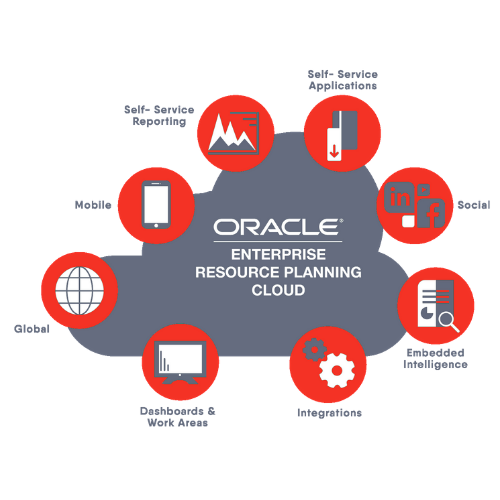
Oracle ERP Fusion offers cloud enterprise resource planning, helping organizations to manage finance, buying, accounting, inventory, and projects, among other core activities.
Think of it as the central brain of the company.
Instead of having different software for different departments, Oracle brings it all into one interconnected system.
Because it is cloud-based, companies don’t have to invest in purchasing servers or upgrade them manually. Oracle manages all this from hosting to security.
Why was it called “Fusion”?
Before Fusion ERP, Oracle had several products such as:
- Oracle E-Business Suite
- PeopleSoft
- JD Edwards
- Siebel
Oracle picked the best from all of them and combined them into a new, contemporary cloud platform.
That is why it is called Oracle Fusion.
Major Modules in Oracle Fusion ERP
Oracle Fusion ERP consists of different modules. Each module handles one part of the business, but all work together seamlessly.
1. Financials
Handles accounting, general ledger, payables, receivables, expenses, fixed assets, and cash flow.
2. Procurement
Overseeing suppliers, purchase requests, sourcing, purchasing approvals, and contracts.
3. Project Management
Tracks project costing, project billing, resources, and profitability.
4. Risk Management
Ensures compliance, detects fraud, and manages internal controls.
5. Supply Chain (SCM Cloud)
Manages inventory, order management, logistics, planning, and manufacturing.
6. Human Capital Management (HCM Cloud)
Responsible for HR, payroll, talent management, and workforce planning.
Why Businesses Opt for Oracle Fusion ERP
Here are simple reasons why businesses prefer Fusion ERP:
- Real-time data
View live reports at any moment no delays and no manual updates. - Automation
Tasks like invoice entry, approvals, reconciliations, and journal posting are automated. - Cloud-based
No hardware, no manual upgrades. Oracle automatically upgrades the system quarterly. - Powerful security
Fusion ERP includes advanced security, role-based access, audit logs, and compliance tools. - Easy Integrations
Works well with Oracle apps, CRM systems, HR tools, finance tools, and custom applications via REST APIs. - Better decision-making
Also includes dashboards, analytics, KPIs, and AI-powered recommendations.
Actual Examples of Fusion ERP Usage within Companies
A manufacturing company
Uses Fusion ERP for supplier orders, inventory tracking, cost analysis, and production management.
A global enterprise
Uses Fusion for multi-currency financial reporting and consolidation across multiple countries.
A service company
Utilizes Fusion to track project costs, resource planning, and client billing.
Oracle Fusion ERP vs. Traditional ERP
Traditional ERP systems:
- Require servers
- Require manual upgrades
- Having high IT costs
- Offer slower reports
- Provide limited integrations
Oracle Fusion ERP:
- Fully cloud-based
- Auto updates every quarter
- Lower IT cost
- Real-time dashboards
- Smooth integrations using APIs
Career Opportunities in Oracle Fusion ERP
Demand for Oracle Fusion professionals is increasing rapidly. Popular roles include:
- Fusion Financials Consultant
- Fusion Procurement Consultant
- Fusion SCM Consultant
- Technical Developer
- ERP Support Analyst
- Implementation Consultant
These roles offer competitive salaries and strong long-term career growth.
Challenges Companies Face During Implementation
While Fusion ERP is powerful, implementation can be challenging. Common issues include:
- Migrating data from older systems
- Training employees
- Aligning business processes
- Integrating with other tools
- Configuring workflows correctly
Most organizations work with Oracle partners to ensure smooth implementation.
The Future of Oracle Fusion ERP
Oracle is adding more AI and automation features every year. Upcoming improvements include:
- AI-based predictions
- Autonomous financial processes
- Advanced anomaly detection
- Intelligent forecasting
- Automated compliance tools
ERP systems are moving toward becoming fully intelligent and self-operating.
Conclusion
Oracle Fusion ERP is one of the most modern cloud ERP systems available today. It brings finance, procurement, projects, HR, and supply chain into one unified platform. With real-time data, automation, built-in security, and continuous updates, Fusion ERP helps companies run faster, smarter, and more efficiently. Whether you’re a business leader planning a digital transformation or someone looking to build a career in ERP, Oracle Fusion ERP is a powerful and future-ready
References
https://www.oracle.com/erp/
https://docs.oracle.com/en/cloud/saas/erp/
https://docs.oracle.com/en/cloud/saas/financials/
https://www.oracle.com/readiness/