The Gen Z Shift: Adapting to and Evolving the Modern Workplace
Introduction
Generation Z (born 1996–2010) is entering the workforce with a digital-first mindset that is fundamentally reshaping traditional office norms. Growing up with instant access to information, this generation prioritizes efficiency, transparency, and personal values, forcing companies to rethink how they attract and retain talent.
1. The Flexibility Mandate
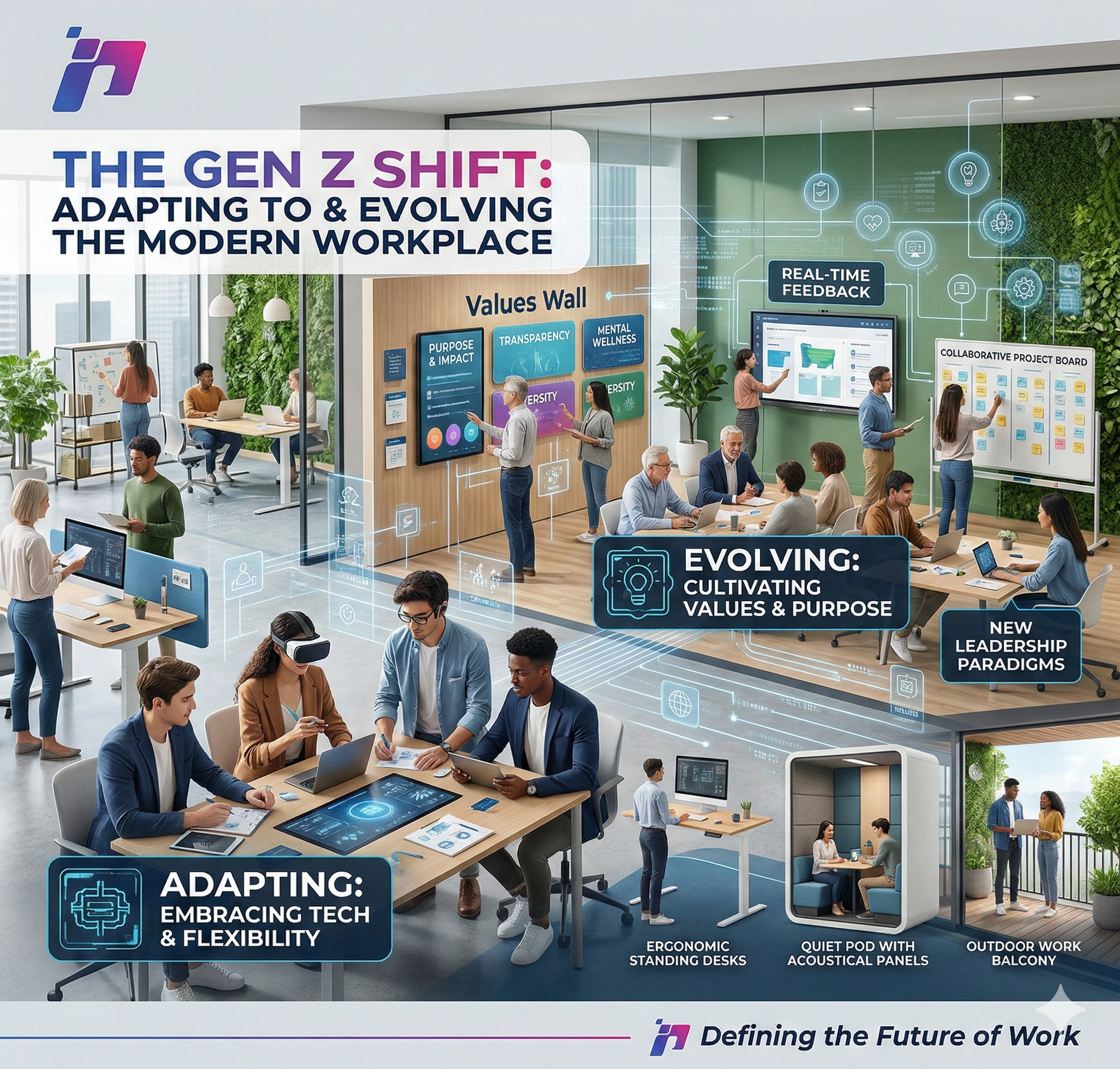
For Gen Z, flexibility isn’t a “perk”—it’s a standard. Having started careers during a global shift toward remote work, they value results and productivity over “desk time.” Hybrid models and flexible schedules are essential for them to maintain a healthy balance between professional output and personal life.
2. Prioritizing Mental Health and Well-being
Unlike previous generations, Gen Z is vocal about burnout and mental health. They seek employers who provide supportive environments, realistic workloads, and wellness resources. To them, a job that respects their mental well-being is often just as valuable as a competitive salary.
3. Purpose-Driven Careers
Gen Z looks for meaning beyond the paycheck. They gravitate toward organizations that demonstrate a genuine commitment to sustainability, diversity, and ethical leadership. Transparency is key; if a company’s mission feels performative, Gen Z will likely look for opportunities elsewhere.
4. Modern Communication and Instant Feedback
The era of long, formal emails is fading. Gen Z prefers quick, direct communication via tools like Slack or Microsoft Teams. Furthermore, they favor continuous, real-time feedback over traditional annual performance reviews, allowing them to pivot and improve constantly.
5. Redefining Career Growth
Traditional, slow-moving career ladders don’t appeal to this generation. They crave rapid skill development, microlearning, and diverse project experiences. They are “continuous learners” who value mentorship and the ability to gain practical, tech-forward skills early in their careers.
6. Global Collaboration and Tech-Fluency
Being true digital natives, Gen Z is naturally equipped for global, distributed teams. They expect workplace technology to be as seamless and efficient as the apps they use in their personal lives. Outdated systems are a major friction point; they thrive when given modern, user-friendly digital tools.
Conclusion
Gen Z is doing more than just adapting to work culture—they are actively upgrading it. By championing flexibility, mental health, and purpose, they are steering the future of work toward a more empathetic, efficient, and technologically integrated global environment.